A bathroom remodel should not only look good, but it should also support your comfort, safety, and independence in the years ahead. Since bathrooms are one of the most common places in the home for slips and falls, thoughtful design choices can make a major difference in how well the space works over time. Aging-in-place remodeling focuses on creating a bathroom that is easiest to use, safer to move through, and flexible enough to support changing mobility needs later on [1].
Here are several bathroom remodeling features that can help your space remain safe, functional, and comfortable as you age.
Tip #1: Start with a shower that is easier to enter
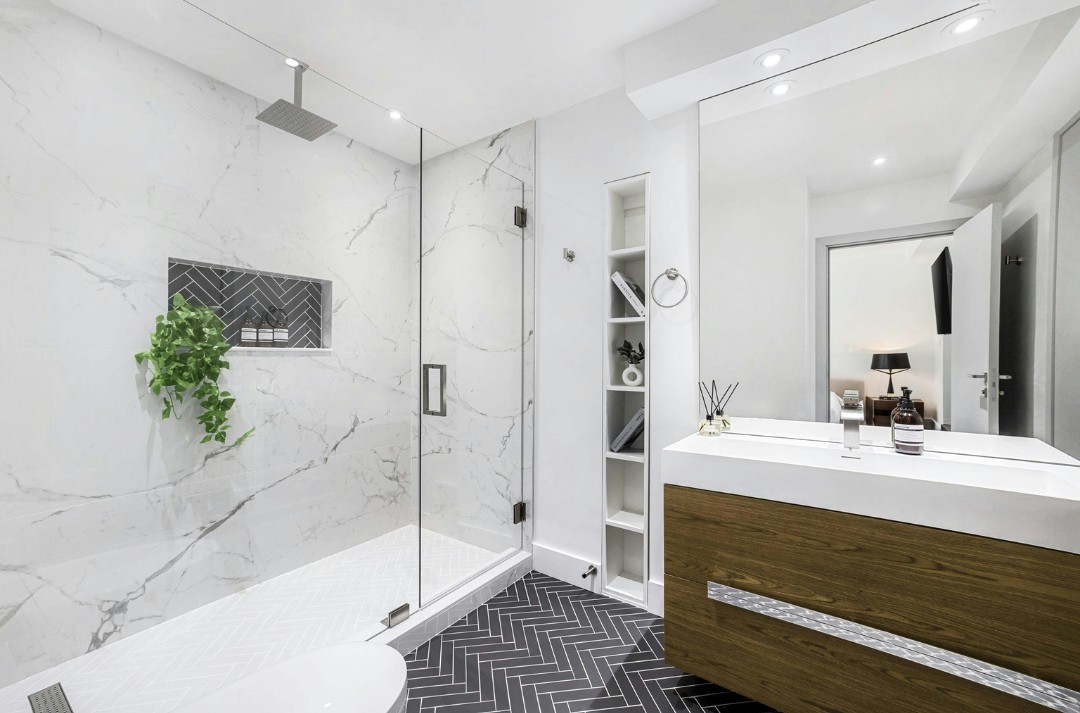
One of the most important upgrades is replacing a traditional tub or high-threshold shower with a walk-in or low-threshold shower [2]. This reduces the step-over barrier that can become more difficult with age, balance concerns, or joint pain. A walk-in shower can also be paired with a built-in bench or shower seat and a handheld shower sprayer [2] to make daily use easier and more comfortable.
Tip #2: Add support where it matters most
Bathrooms should provide stability in the places where slips are most likely. Grab bars near the shower and toilet can improve balance and make sitting, standing, and stepping in or out of the shower safer [1]. Today’s options can also blend into the design more naturally, so safety does not have to come at the expense of style.
Tip #3: Choose flooring with slip resistance in mind
Flooring plays a major role in long-term bathroom safety. Slip-resistant flooring materials and bathroom tiles rated for wet areas can help reduce the risk of falls on slick surfaces [2]. This is especially important near the shower, tub, and toilet, where water is most likely to collect. A remodel is the perfect time to swap out glossy, slippery finishes for surfaces designed with traction in mind.
Tip #4: Think about toilet height and ease of use
A standard toilet may become harder to use over time. Comfort-height or raised toilets can make it easier to sit down and stand up, especially for people with knee, hip, or back discomfort [2]. This is a relatively simple change, but it can improve day-to-day comfort in a big way.
Tip #5: Improve lighting throughout the room
Good bathroom lighting is not just about appearance, it’s a safety feature. Layered lighting with overhead illumination, mirror lighting, and night lighting can improve visibility and help prevent missteps, especially during nighttime bathroom visits [2]. Brighter, more even lighting can also make grooming and other daily tasks easier on aging eyes.
Tip #6: Plan for easier movement and access
A bathroom that works well long term should feel open and easy to navigate. Wider doorways, a more open floor plan, and thoughtful spacing around fixtures can make the bathroom more accessible for walkers, wheelchairs, or simple ease of movement [3]. Even if those features are not needed now, planning for them during a remodel can help future-proof the space.
Tip #7: Include fixtures that are easier on the hands
Small details matter in an aging-in-place remodel. Lever-style handles, touch-activated faucets, and other easy-to-use controls can make the bathroom more comfortable for anyone with arthritis, reduced grip strength, or limited mobility [2]. These updates also add convenience for every day use at any age.
Remodel for your future safety and comfort
A bathroom that will still work as you age should be designed with both present comfort and future usability in mind, Features like walk-in showers, grab bars, slip-resistant floors, better lighting, and accessible layouts can help create a space that feels safer, more comfortable, and easier to use for years to come. Contact DNA Remodeling today to plan a bathroom remodel that supports aging in place without sacrificing style.
Sources: